Lesson 1: “Exegesis Introduction and Overview”
September 27, 2026 Preacher: John Bell Series: Sunday School: How To Understand and Apply the New Testament - From Exegesis to Theology
- Listen
- Downloads
Twelve Steps for Exegesis and Theology
- Genre. Establish guidelines for interpreting a passage’s style of literature.
- Textual Criticism. Establish the original wording.
- Translation. Compare translations.
- Greek Grammar. Understand how sentences communicate by words, phrases, and clauses.
- Argument Diagram. Trace the logical argument by arcing, bracketing, or phrasing.
- Historical-Cultural Context. Understand the situation in which the author composed the literature and any historical-cultural details that the author mentions or probably assumes.
- Literary Context. Understand the role that a passage plays in its whole book.
- Word Studies. Unpack key words, phrases, and concepts.
- Biblical Theology. Study how the whole Bible progresses, integrates, and climaxes in Christ.
- Historical Theology. Survey and evaluate how significant exegetes and theologians have understood the Bible and theology.
- Systematic Theology. Discern how a passage theologically coheres with the whole Bible.
- Practical Theology. Apply the text to yourself, the church, and the world.
Exegesis Is Both a Science and an Art
How Do Exegesis and Theology Interrelate?
Five Theological Disciplines
- Exegesis interprets a text by analyzing what the author intended to communicate. It draws the meaning out of a text. The first SIX steps in this Sunday School series are components of exegesis: genre, textual criticism, translation, historical-cultural context, literary context, and word studies.
- Biblical theology studies how the whole Bible progresses, integrates, and climaxes in Christ. It makes organic, salvation-historical connections with the whole canon on its own terms, especially regarding how the Old and New Testaments
integrate and climax in Christ. It focuses on the turning points in the Bible’s story line, and its most pivotal concern is how the New Testament uses the Old. Old and New Testament theology are subsets of whole-Bible biblical theology. We must read the whole Bible—including the Old Testament—with Christian eyes. - Historical theology surveys and evaluates how significant exegetes and theologians have understood the Bible and theology. How has Christian doctrine developed? In particular, how has it responded to false teaching? This focuses on periods of time earlier than our own.
- Systematic theology discerns how a passage theologically coheres with the whole Bible. This builds on but goes beyond exegesis. It answers the question “What does the whole Bible say about [fill in the blank]?” It presupposes that the whole Bible is coherent, that it doesn’t contradict itself.
- Practical theology applies the text to yourself, the church, and the world. It answers the question, “How should we then live?”
The Complex Interrelationship Between the Five
Naïve: Exegesis → Biblical Theology → [Historical Theology] → Systematic Theology
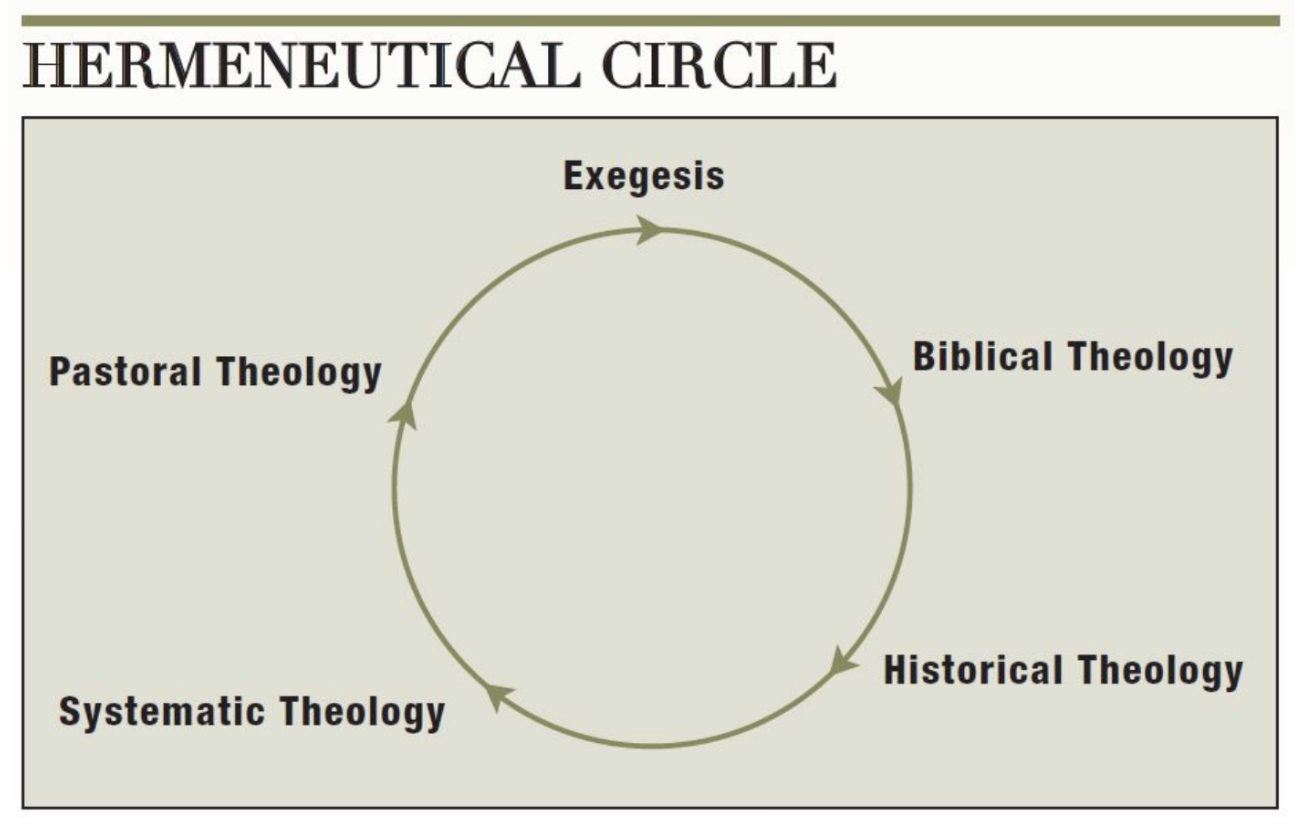
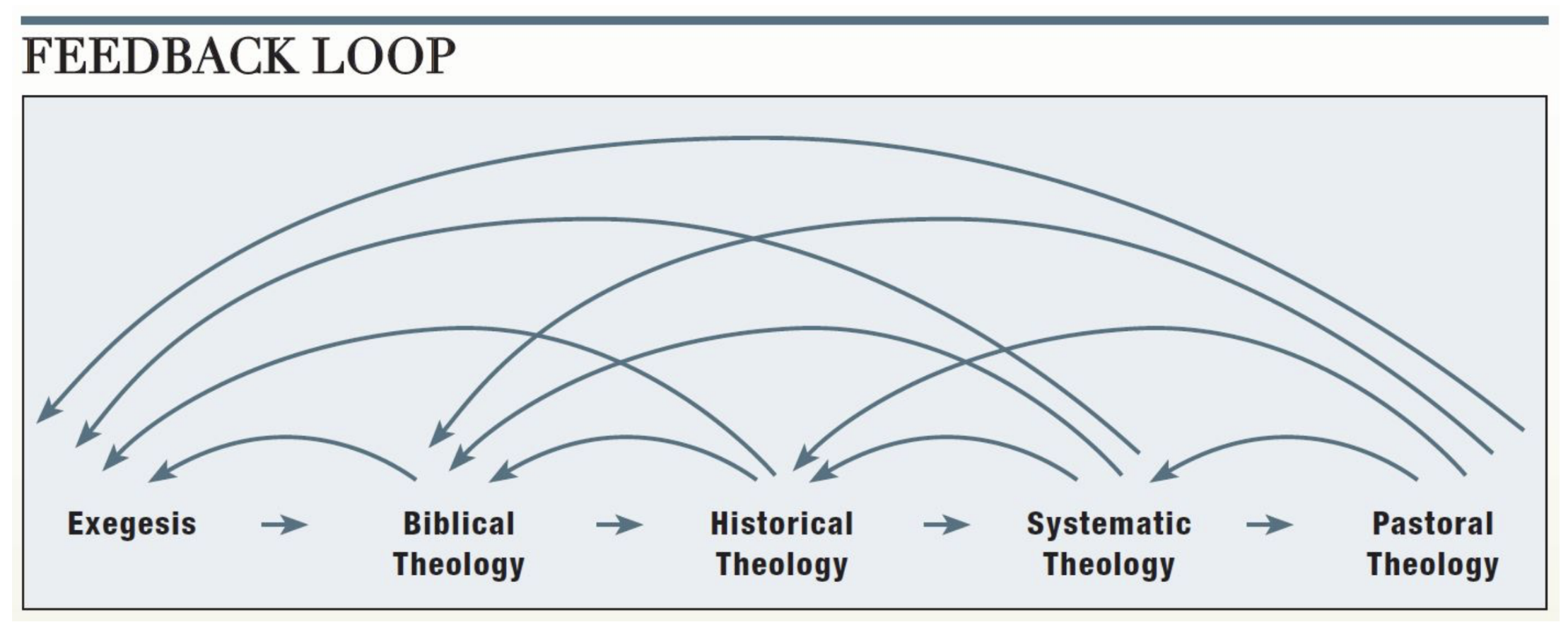
“There are always feedback loops - information loops that go back and reshape how one does any exegesis or theology. The loops should not take over the final voice, but they shape the process whether one likes it or not. It’s absurd to deny that one’s ST does not affect one’s exegesis. But the line of final control is the straight line from exegesis right through BT and HT to ST and PT. The final authority is the Bible and the Bible alone.” (D.A. Carson)
More in Sunday School: How To Understand and Apply the New Testament - From Exegesis to Theology
October 4, 2026
Lesson 2: "Genres"