Lesson 3: "Textual Criticism"
October 25, 2026 Preacher: John Bell Series: Sunday School: How To Understand and Apply the New Testament - From Exegesis to Theology
ESTABLISH THE ORIGINAL WORDING
What Is Textual Criticism?
Textual criticism studies manuscript evidence to determine the authorial wording of
scripture. It gathers and organizes data, compares and evaluates variant readings,
and reconstructs the transmission history. Determining the text’s most reliable
wording is both a science and an art.
What Copies of the New Testament Exist?
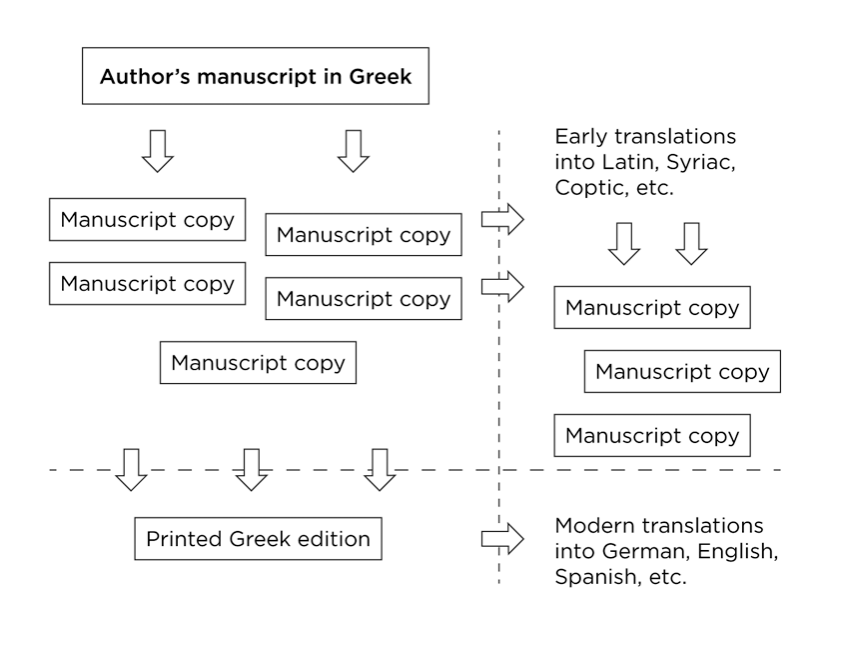
The copies of the New Testament fall into three categories:
- Greek manuscripts. This is the most important category. There are four types
of Greek manuscripts:
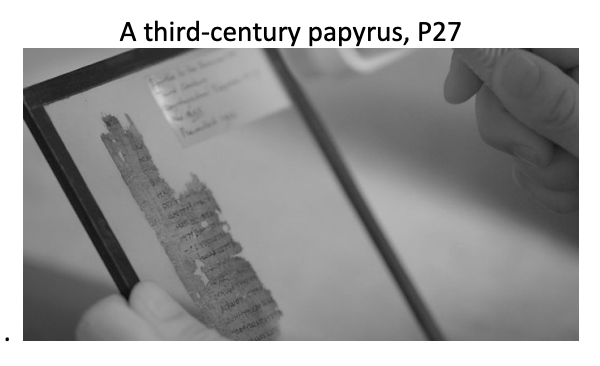
• papyri (material = papyrus rather than parchment, or animal skin)
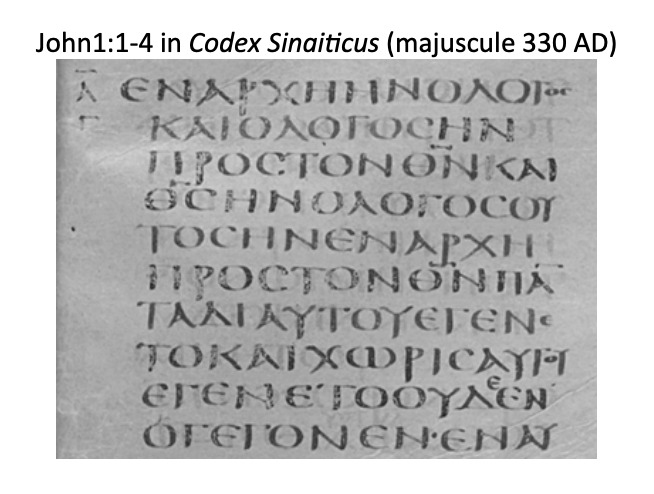
• majuscules (all-capital letters)
• minuscules (lowercase and cursive)
• and lectionaries (portions of Scripture to read for particular days). These date
from about the second through the sixteenth centuries.
These are the official numbers as of July 2016:
• Papyri: 131
• Majuscules: 323
• Minuscules: 2,932
• Lectionaries: 2,463
• Total: 5,849 - Ancient translations.
- New Testament quotations in writings by church fathers.
How Significant Is Textual Criticism for Exegesis and Theology?
How Should You Evaluate Variant Readings? Here are five steps:
- Understand What the Different Kinds of Variant Readings Are
There are three basic kinds of variant readings:- Insignificant.
- Significant but not viable (Mark 16:9-20; John 7:53-8a; 1 John 5:7b-8a)
- Significant and viable.
- Understand How to Read the Textual Apparatus in the UBS6 and NA28/29
- UBS6 = United Bible Societies, 6th edition
- NA28/29 = Nestle-Aland, 28th edition.
- https://youtu.be/DeSS58F1GwY?si=0Dau4vSUGpJ7GU4U (Ephesians 1:1 “in Ephesus)”
- Weigh the Internal Evidence
- Prefer the harder reading.
- Prefer the shorter reading.
- Weigh the external evidence.
- What is its date and character? In general, it’s better to have an early date and a manuscript with a reputation as reliable.
- What text-type is it, and is it a solid, unmixed text-type? Traditionally, the
three major text-types are Alexandrian, Western, and Byzantine. The
Alexandrian is known for its early dating and accuracy; the Western for its early
dating and adding of words to harmonize and explain texts; and the Byzantine
for its later dating, adding of words to smooth out difficult readings (even more
so than the Western text-type), and abundance (i.e., 80 percent of existing
manuscripts).
- Is the reading geographically widespread? The more widespread, the better.
- Consider Arguments by Experts on Textual Criticism
More in Sunday School: How To Understand and Apply the New Testament - From Exegesis to Theology
November 15, 2026
Lesson 5: "Historical Cultural Context" (Part I)November 8, 2026
Lesson 4: "Translations" (Part II)November 1, 2026
Lesson 4: "Translation" (Part I)